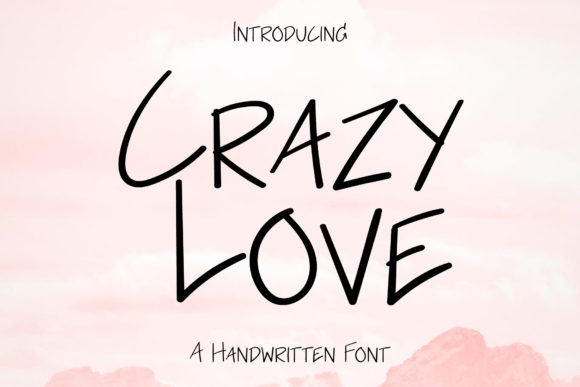
Crazy Love: A Handwritten Font That Feels Like a Smile
Imagine opening an email newsletter and instantly feeling welcomed—not by the words, but by the warmth of the typeface. Or designing a small business menu where every dish name seems to lean in, friendly and inviting. That’s the quiet power of Crazy Love: a sweet and simple handwritten font whose friendly feel isn’t just decorative—it’s functional.
Why a Handwritten Font Like Crazy Love Matters—Beyond Aesthetics
Typography shapes perception before a single word is read. In a digital landscape saturated with clean sans-serifs and polished serifs, Crazy Love stands out by leaning into humanity. Its gentle irregularities—the slight variation in stroke weight, the soft entry and exit of each letter, the subtle rhythm of its baseline—signal approachability, sincerity, and care. That’s not stylistic flair; it’s psychological resonance. For creators and communicators, that resonance translates directly into engagement, trust, and memorability.
Where Crazy Love Fits—and Where It Shines Brightest
Crazy Love thrives in contexts where tone and connection matter as much as information. It’s not meant for dense legal disclaimers or technical documentation—but it excels where emotional clarity supports the message.
- Small business branding: A local bakery using Crazy Love for its chalkboard-style Instagram stories or takeaway packaging feels personal, not corporate. Customers don’t just see “blueberry muffin”—they sense the baker’s pride and warmth.
- Educational materials for younger audiences or wellness spaces: Teachers crafting printable mindfulness cards or yoga studio newsletters find Crazy Love lowers cognitive load and invites participation. Its simplicity avoids visual fatigue without sacrificing legibility at medium sizes (16–24px).
- Personalized marketing assets: Freelancers sending custom proposals or bloggers designing opt-in lead magnets often use Crazy Love for headlines or callouts. It signals “this was made for you,” subtly differentiating their offer from templated alternatives.
Practical Benefits You Can Feel—Not Just See
Using Crazy Love isn’t about swapping fonts for novelty. It’s about reducing friction in how people receive your work. Consider these real-world outcomes:
When a wedding photographer replaces a generic script font with Crazy Love on their pricing guide, clients report feeling “less like they’re reviewing a contract and more like they’re being invited into a conversation.” That shift doesn’t change the numbers—but it changes how those numbers land.
For educators building digital lesson slides, pairing Crazy Love for activity titles with a clear, neutral body font (like Open Sans or Lato) creates intuitive visual hierarchy. Students scan faster, retain context better, and associate the learning moment with positivity—not stress.
Bloggers using Crazy Love for pull quotes or section dividers notice higher scroll depth in long-form posts. Readers pause—not because the font is distracting, but because its familiarity (reminiscent of handwritten notes or journaling) triggers a subconscious sense of intimacy.
Who Gains the Most—and Why It’s Not Just About “Creativity”
Professionals who rely on relational credibility benefit most: therapists adding warmth to client handouts, nonprofit staff humanizing impact reports, indie publishers designing book covers for memoirs or self-help titles, and solopreneurs building brands rooted in authenticity rather than authority.
It’s also valuable for time-constrained creators. Because Crazy Love is intentionally simple—not ornate or overly stylized—it scales well across formats without requiring manual tweaks. You won’t spend hours adjusting kerning for social media banners or reworking letterforms for mobile buttons. Its consistency across weights (regular only, no bold or italic variants) is a constraint that becomes a strength: fewer decisions, faster execution, cohesive output.
A Note on Fit—and When to Pause Before Choosing
Crazy Love works best when contrast supports its intent. Pair it thoughtfully: avoid stacking it with other expressive fonts, and steer clear of competing scripts or highly geometric typefaces in the same layout. Its friendliness can blur into informality if used for serious regulatory content or formal announcements—think city council meeting agendas or medical consent forms.
Also, while highly legible at display sizes (20px and up), Crazy Love isn’t optimized for body text under 14px. Use it for headings, quotes, logos, buttons, and short labels—not paragraphs. If your project demands extended reading in a handwritten style, explore alternatives with expanded character sets or optical sizing.
Simple Ways to Start—No Design Degree Required
You don’t need advanced tools to test Crazy Love. Try these low-lift experiments:
- Add it to one email subject line this week—especially for a personal outreach or welcome sequence. Track open rates alongside identical messages using your default font. The difference may be subtle, but consistent patterns reveal real impact.
- Replace the heading font on your next Canva social graphic. Keep everything else identical—same colors, layout, image. Ask three trusted colleagues which version feels more “like you.” Their instinctive response tells you more than analytics ever could.
- Print two versions of a workshop handout: one with Crazy Love for section headers, one with your usual font. Hand them to participants randomly and observe which version sparks more spontaneous comments or questions during breaks.
These aren’t vanity tests. They’re ways to measure how typography influences attention, interpretation, and emotional response—core elements of effective communication.
More Than a Font—A Subtle Shift in How You Show Up
Choosing Crazy Love isn’t about chasing trends. It’s a deliberate alignment: matching your visual voice to your values. If you prioritize empathy over polish, clarity over complexity, and connection over conformity, this font quietly reinforces that stance—without saying a word.
It won’t fix unclear messaging or compensate for weak strategy. But paired with thoughtful content and intentional design, Crazy Love helps what matters get noticed—not because it shouts, but because it feels like it belongs.
That’s the quiet confidence of a font that doesn’t try to be everything—just warmly, honestly, and memorably itself.